
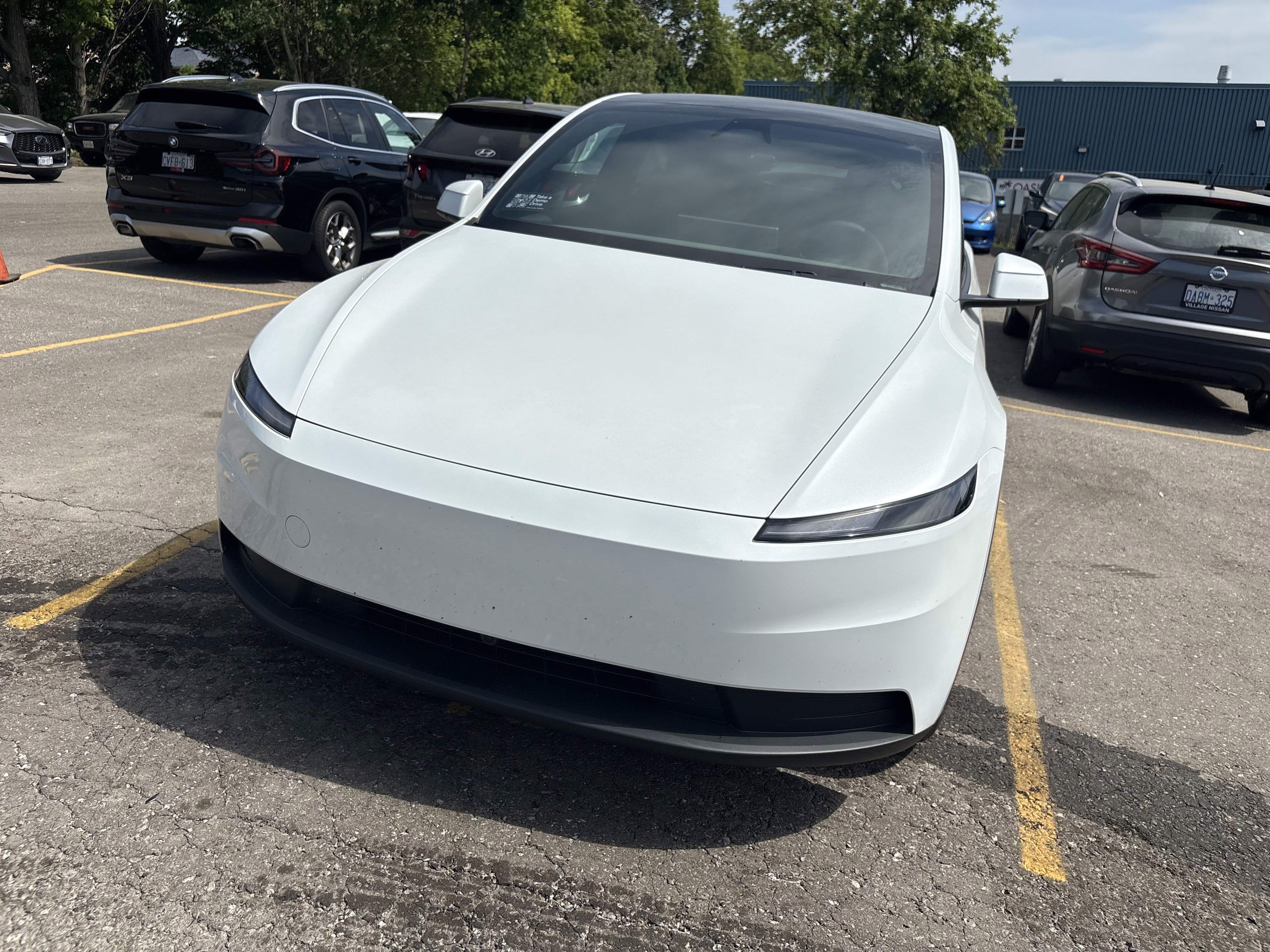
Back in March, I was able to get a loaner Highland Model 3 for one day. It was a very interesting experience after having driven the original Model Y for some time. This time, I used the Tesla self-serve test drive program and tried the new basic Model Y for 2 hours.
The self-serve test drive program itself was fantastic. With minimal human interaction involved, you can book either a Model Y or Cybertruck (as currently available — it used to be the Model 3 and Cybertruck) for up to 2 hours (it used to be only 1 hour) for any usage you want. The process is simple and smooth, with online booking and driver's license upload in the app, then you proceed to the pick-up location during your time slot to start driving. If you previously owned a Tesla and saved any driver profiles, they will also be synced to the new car for a frictionless experience. Given the high security of Tesla vehicles themselves, Tesla doesn't seem worried about vandalism or anything of the sort.
Anyway, let's get to the basic Model Y experience.
Price
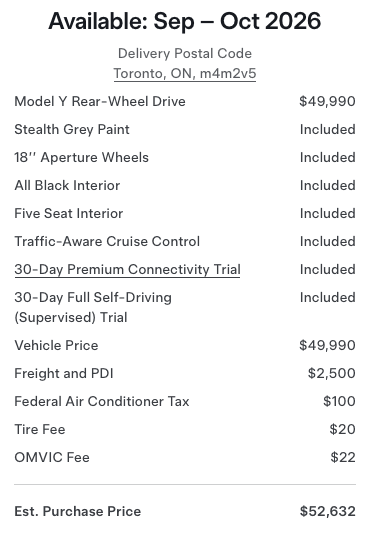
Without a doubt, price is the top selling feature of this cheapest SUV Tesla has ever made. In Canada, the RWD version can be bought for about $45,000 CAD (after government incentive deduction) plus fees and taxes; in the US, it starts from $39,990 USD plus fees and taxes. This starting price is now cheaper than both BMW's and Mercedes' cheapest SUVs on the market, the X1 and the GLA. When you factor in the premium of an EV and the savings of electric charging, the entry-level Model Y is undoubtedly cheaper, either in purchase price or in cost of ownership.
It's also undeniable that the cheap cost comes with a price, which is the many stripped-down features compared to the more premium Model Y. Now let's talk about how it actually feels — whether it's worth the price, or whether it's more like a cheaper Corolla instead of a premium SUV.
First Look
The vehicle I got was rather new, with only 700 km in mileage, fully equipped with FSD V4 hardware, an AMD processor, and V14.3.3 self-driving software.
As an experienced Tesla owner, there are a few things that pop out as soon as you step into the cabin.
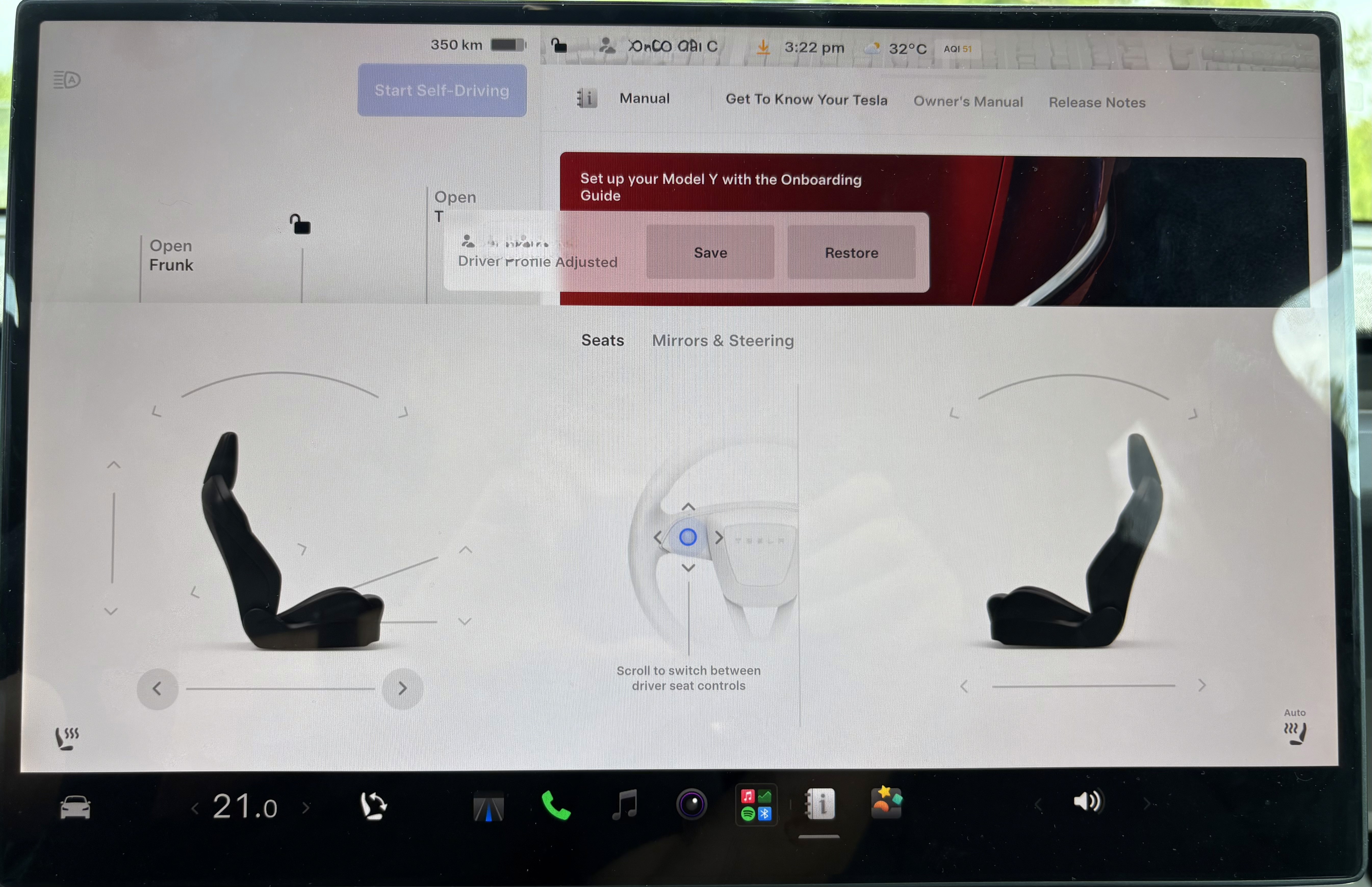
The most obvious one is the seat position adjustment UI on the screen, which adds a bit of complexity to the originally cleaner UI. The entry-level Model Y has removed the physical seat adjustment buttons, so everything about the seats has to be done through the screen. However, with the position auto-saved to your profile, this change is not too annoying. I do need to point out that there are fewer adjustments available for the passenger seat, and air cooling has been removed for both seats.
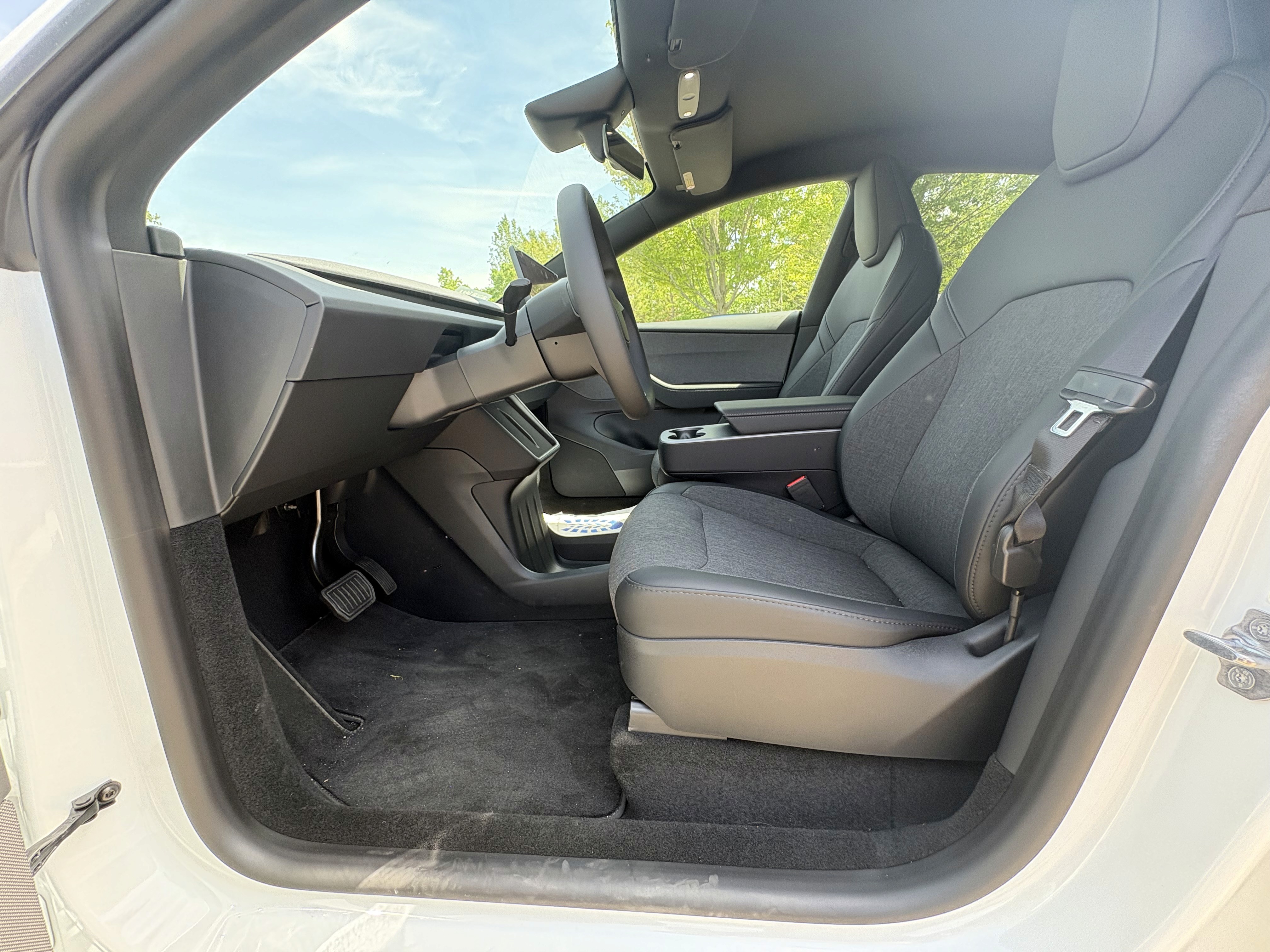
Another obvious change is that the seat material is now a combination of fabric and leather (vegan?). Unlike traditional fabric seats on other cars, these new seats still provide great support to me, and I don't find them cheap-feeling at all. What's even better is that they might be less hot in summer.
Also, the central console has been replaced with an empty space. You can no longer store your things separately anymore, but have to throw everything into the storage bin between the driver and passenger. I'm sure there will be a line of aftermarket storage boxes sold on Amazon that precisely fit the space, but I do like the cleaner design, and it's easier to move between the two seats now if your driver-side door gets blocked by another car in a parking lot.
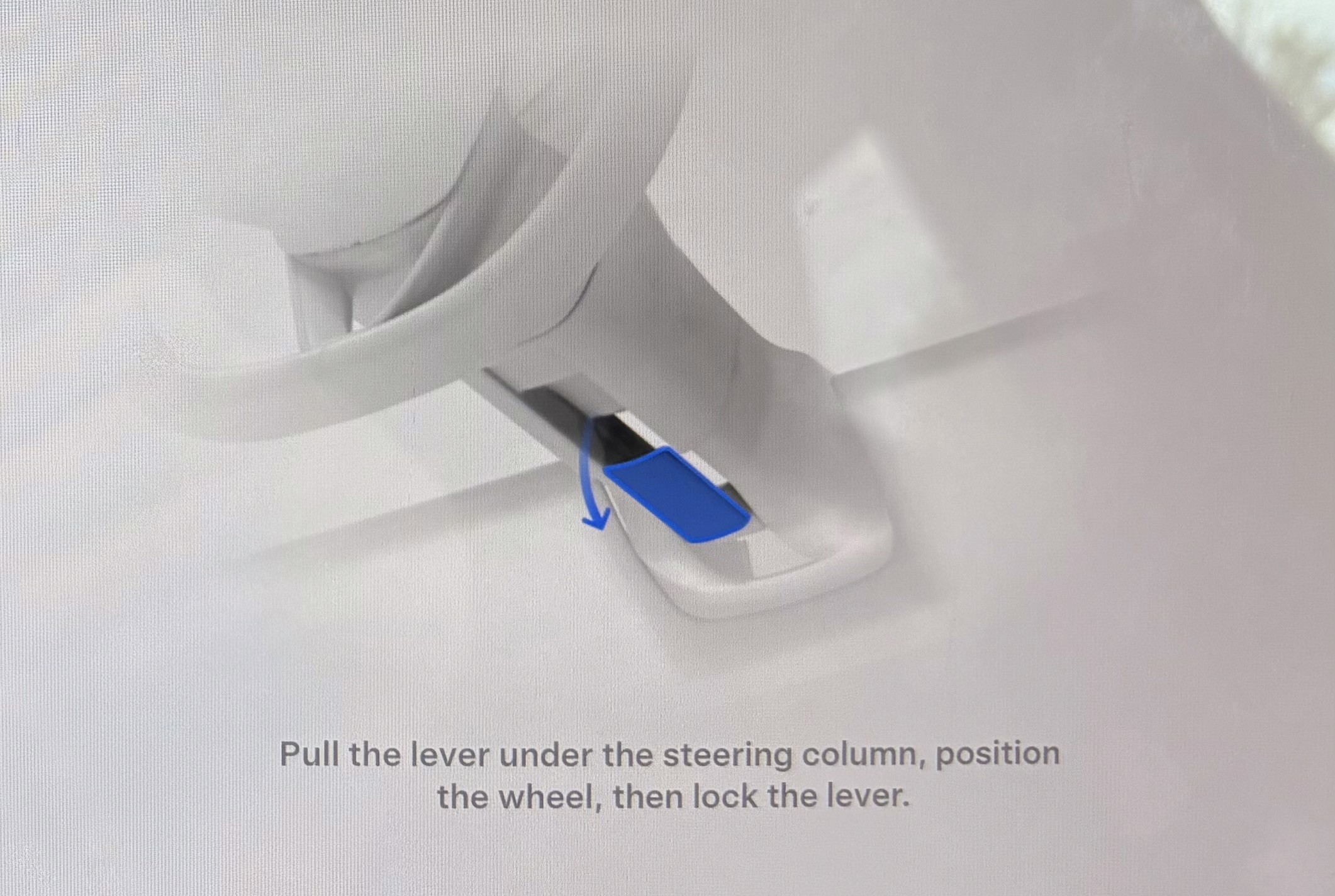
With many things going digital, one design actually went back in time: the steering wheel now requires manual adjustment, and if you saved any settings to your profile in the past, they won't do anything here. This change originally bothered me, as it seems to go against the simplicity of the Tesla experience. But then, as I recalled from my previous blog post, when you position every feature of a Tesla to be ready for a self-driving future, maybe the position of the steering wheel is less important than sitting comfortably in your seat.
Driving Experience
Another big sacrifice the entry-level Model Y made is slower 0–100 km/h acceleration, at almost 7 seconds. In real life, this is still faster than a lot of cars on the road, but you don't get the advantage of driving an EV anymore.
You can also directly feel that from 0 to 40 km/h, the car kind of drags a bit and isn't pushing hard enough, then there's a sudden acceleration bump after 40 km/h. I feel like Tesla intentionally put some limitations in the software just to draw a line between this car and the more premium version — just like when they used to ship the cheaper Model S with the exact same battery (same manufacturing cost) but limit the range in software to create price discrimination.
As for FSD, on paper it's the exact same system as the more expensive Model Ys and other new Teslas. When activated, it feels as smart as other new Teslas with V4 hardware. You can check out how I liked the V4 experience in my previous Model 3 review post.
Control
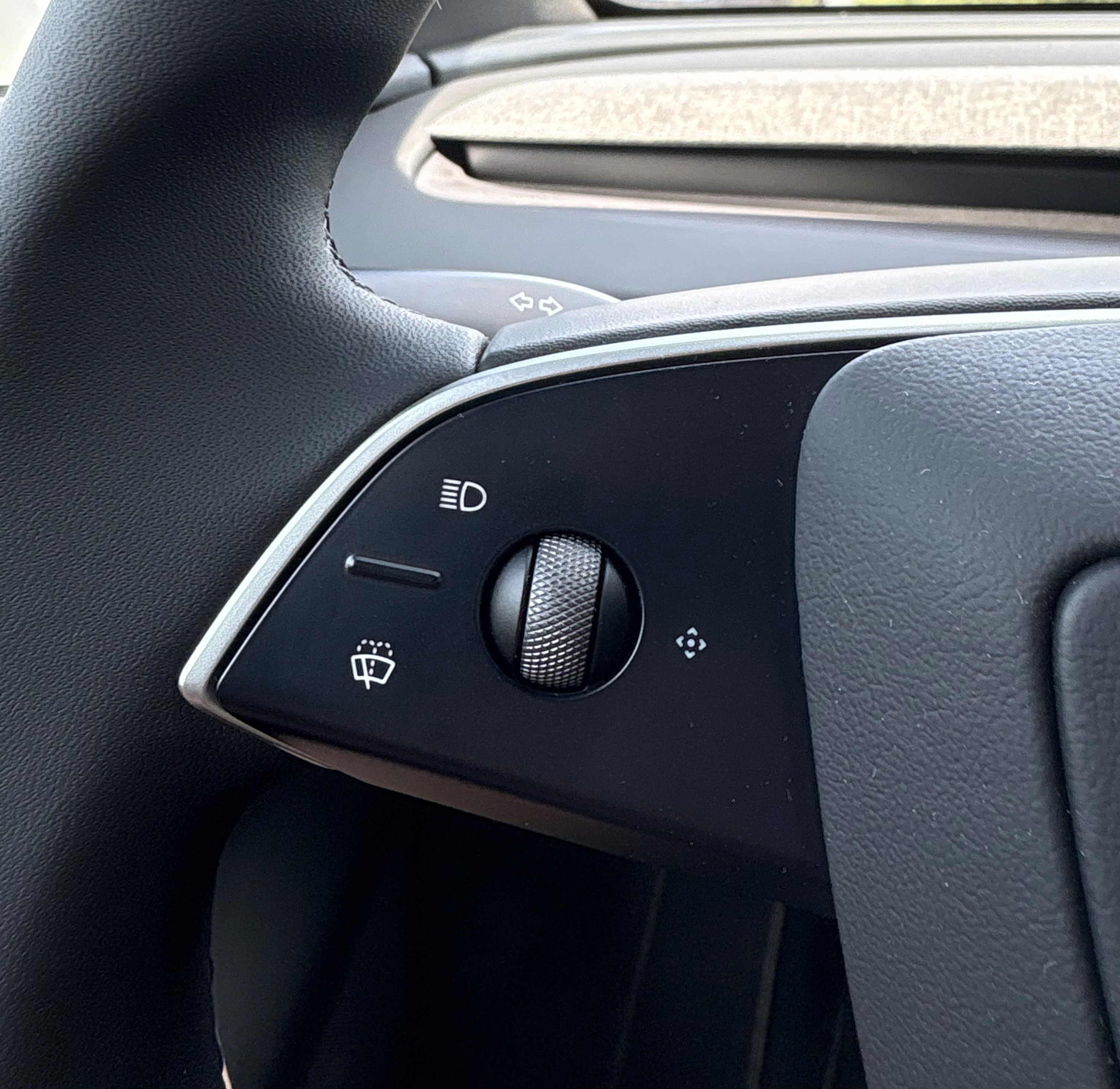
While the physical seat adjustment buttons have been removed, the indicator light stalk has been added back. In my previous Model 3 Highland review, I commented on how confusing the touch-controlled steering wheel buttons were — all of that has been fixed in this car. It's weird to say this, but it's as easy as in a 20-year-old car to turn on your turn signals in this Model Y, and to trigger other features without mistake through the steering wheel.
Rear Seats
I'm sure with Tesla's interior camera and seat sensors, they would have data on the average number of passengers in the car over any time duration, distance, or location. My educated guess is that it averages less than 2 and the rear seats are mostly under utilized, because the rear seats are just not really a priority in this car.
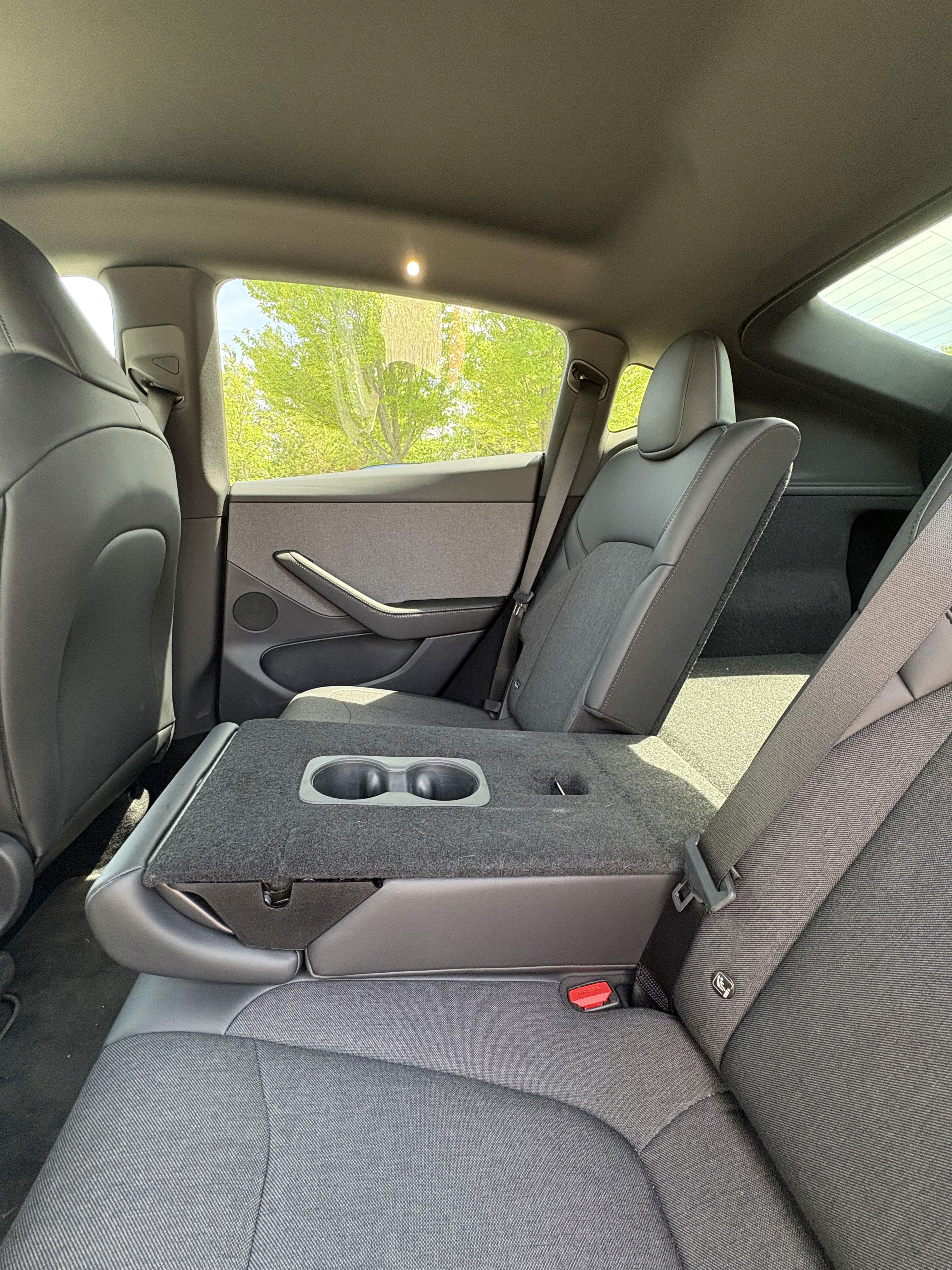
The middle seat can be flipped down, which exposes the felt-finished surface that's part of the trunk finish. And then there's what I would call a weirdly positioned cup holder placed in the middle. Whoever prefers to use a cup holder would immediately feel like a second-class citizen in this car with the finish of the arm rest.
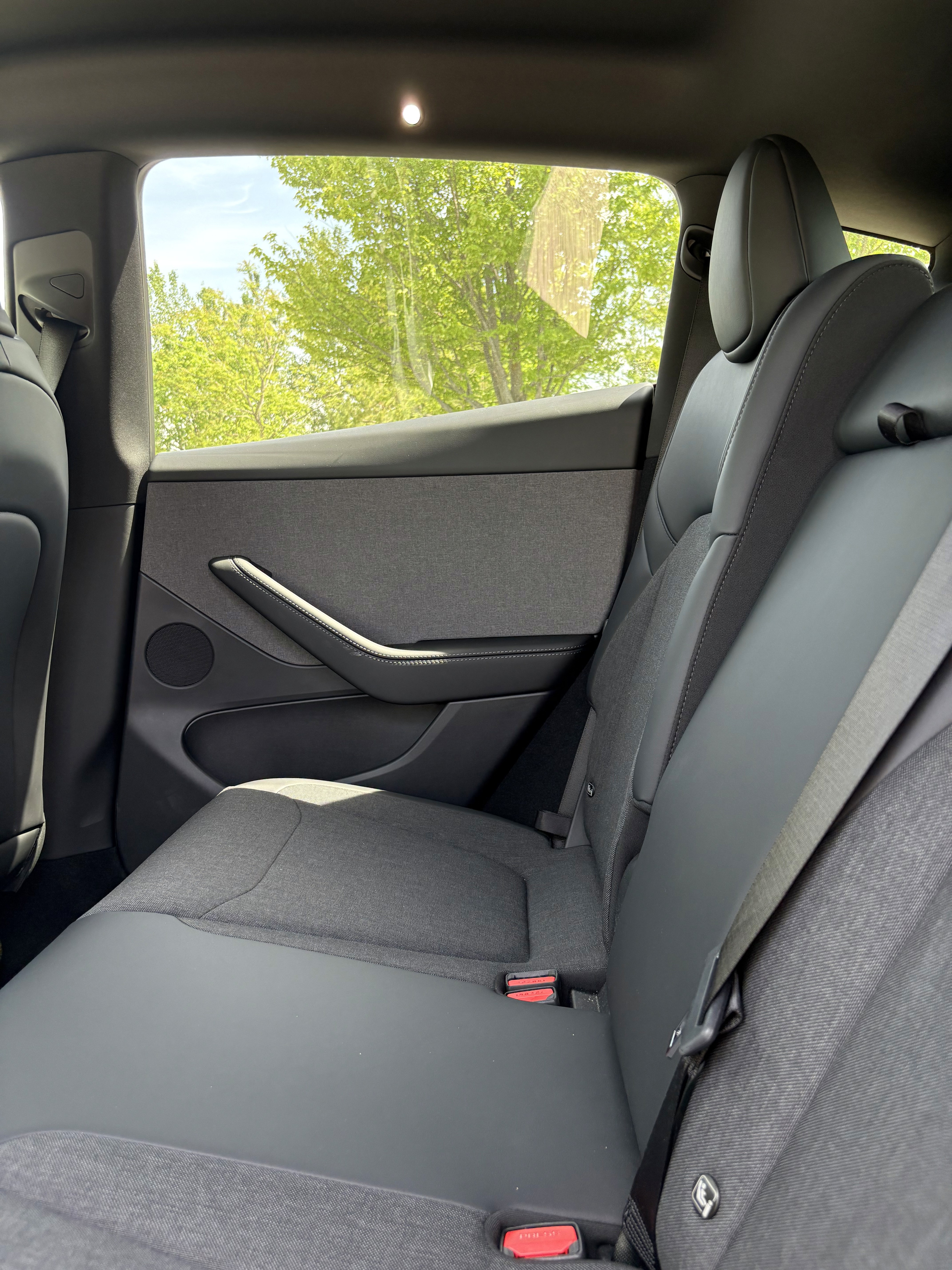
The rear seats themselves have lost the electric motors for folding; instead you get a pull tab similar to the design in a 2-door, 4-seat sedan. The rear seats still support 2-level recline, which is a nice touch.
Storage
With the removal of the center console storage, the interior actually gets more storage inside.
The trunk gets equally large storage as the premium Model Y, with a couldn't-be-more-common design.
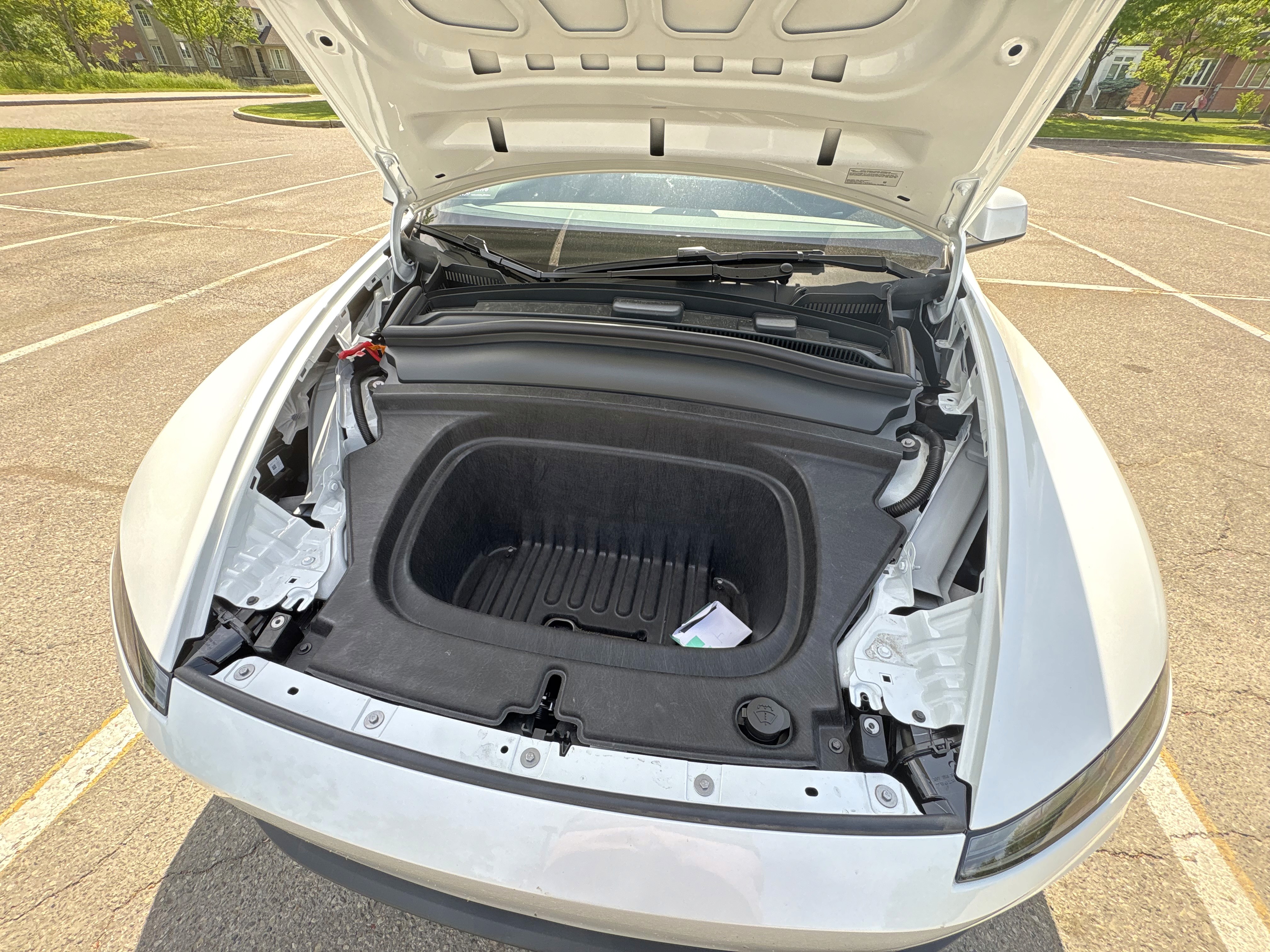
The storage in the front, however, got a bit smaller with its new non-waterproof design, although the 3D-pressed fibre cover does feel sturdy enough to hold some weight. With Tesla's user manual reminding people to be careful when topping up washer fluid so it won't leak underneath, I wonder how durable this design is against weather and human error.
Battery
The basic Model Y has an estimated 463 km range based on the EPA standard. With my average consumption running 10–20% higher in summer and 30–35% higher in winter, it can give me about 300 km to 400 km of range depending on temperature. The good news is that it's equipped with an LFP battery, which allows it to be charged to 100% on a daily basis, so I can always aim for the longest range available instead of limiting charging to 80%, which would only give me 240 km to 320 km of range.
Those numbers are not surprising for an EV owner, and it would satisfy 95% of my needs with home charging unless I'm going somewhere far — a trade-off I can accept considering how expensive gas is these days.
Summary
Overall, with the price in mind, the entry-level Model Y doesn't disappoint. I would strictly consider it a tool that takes me from point A to point B. When I don't feel like driving, FSD takes over for me. When I want to feel the road, the acceleration and handling are just great. The ample storage front and back can take more things than I imagined.
However, I do understand this Model Y doesn't carry a ton of emotional value, given the removal of the full-size glass roof, ambient lighting, and premium leather seats. A vehicle is a big purchase, and most people still attach a great deal of emotional value to it — which might make this car a less ideal choice for them.