
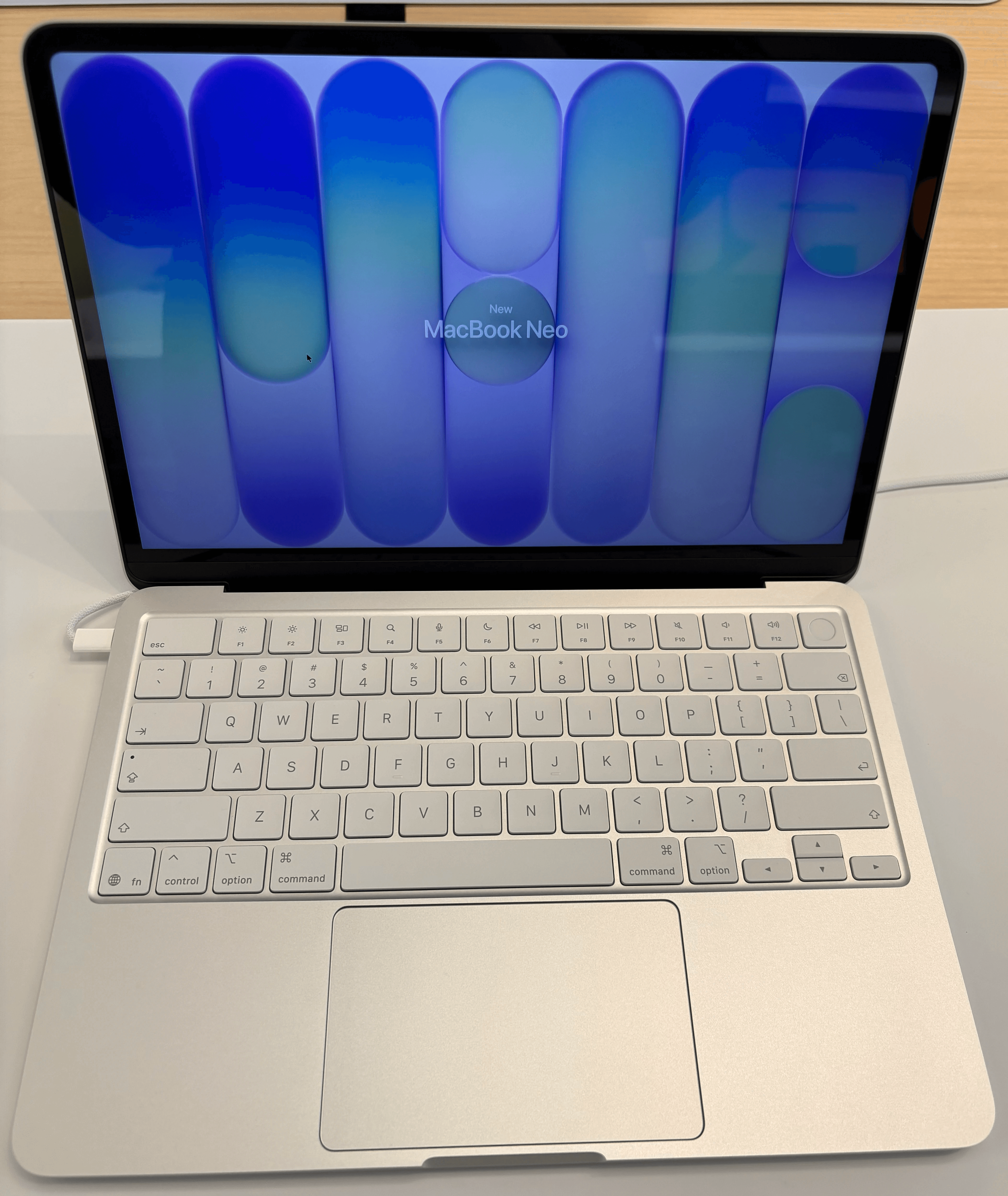
With Apple’s leadership political power shifting back to the product team, it’s been cooking very interesting projects; first it was the iPhone Air, and now it’s the MacBook Neo. I can’t help but look forward to the iPhone Fold (or iPhone Book, however you want to call it now) next year.
Positioning
As a product guy, you can’t talk about a product without thinking about positioning.
Since its launch, many tech critics have been focusing on the price alone. Most are saying it’s a cost-cutting product where Apple is cutting corners on everything or using existing parts from supply chain inventory. It’s not 100% wrong when you compare it to an even older M1 or M2 MacBook Air from a pure spec perspective, but this might be the wrong way to look at the new MacBook Neo.
A few weeks back, for some reason, I was looking into the Chromebook market. Two interesting findings: first, they are not all cheap anymore. Certain Chromebooks are MSRP priced at 699 USD with some high-end Windows laptop specs and premium metal chassis designs. Second, consumers are actually questioning the validity of giving their kids a laptop with a non-desktop style OS (ChromeOS).
The first one is interesting because ChromeOS/Chromebook was originally developed for the education market with a simple UX and cheap price entry point. Then, as time went by, companies forgot about it. They are looking at it from a pure revenue growth standpoint. Let’s increase our Average Selling Price, why don’t we spec it up? Let’s increase our shipment volume, why don’t we launch another 10 models that are almost identical? Eventually, it turned into another Windows+Intel nightmare with an unlimited product roadmap that’s trying to touch every price point with all kinds of specs and designs, regardless of whether users need them or not. Such as a $699 Chromebook being in direct competition with an M1 MacBook Air at Walmart.
However, on the flip side, when you are looking from the consumer perspective, parents actually don’t want their kids to stay on an iPad or ChromeOS for too long. The goal of the Chromebook from the beginning was to help kids adapt to a digital age. Now that role has sort of been replaced by a smartphone or tablet. And guess what? Both smartphones and Chromebooks or an iPad don’t teach kids how to use them as modern productivity tools like Excel or PowerPoint. Now parents want something that can also prepare their kids for the future white-collar workforce (or at least provide some computer skills to run a small business). A Windows laptop would be ok only if it didn't have all the bloatware and security risks from who-knows-what-website your kid might click on. Meanwhile, the problem with MacBooks is that they can easily blow up the budget.
So here comes the MacBook Neo
As the newest addition to the MacBook lineup, the MacBook Neo is a clearly positioned product from the very beginning: an education-market-first device with competitive pricing.
Apple’s product marketing team managed the nuance very well, with all official copy and even newsroom releases mentioning little about education and mostly about being affordable, while all marketing assets are pointing at use cases around students or school.
In this way, it will sell a lot to schools and parents. In addition, by not officially calling out the school use case, Apple also doesn’t reject adult users who simply want a simple and cheap MacBook. Those users won’t be turned away by an image that using it might make them look like an unserious high-schooler. (Imagine if you saw a mid-20s adult using a Chromebook.)
Brand image is never about the product; it’s about who people think they are when using your product.
This great product slash product marketing slash brand philosophy is what makes Apple great with its 1984 campaign and what makes Nike great with its athlete campaign. I sincerely feel like this nuance in messaging marks Apple’s greatness in marketing.
Just to prove the overlooked score by the marketing team: even in this low-key screenshot of an Uber trip. Although the street address is made up, the actual pin on the map is dropped at the Asian Art Museum in San Francisco, I guess for a school trip scenario.
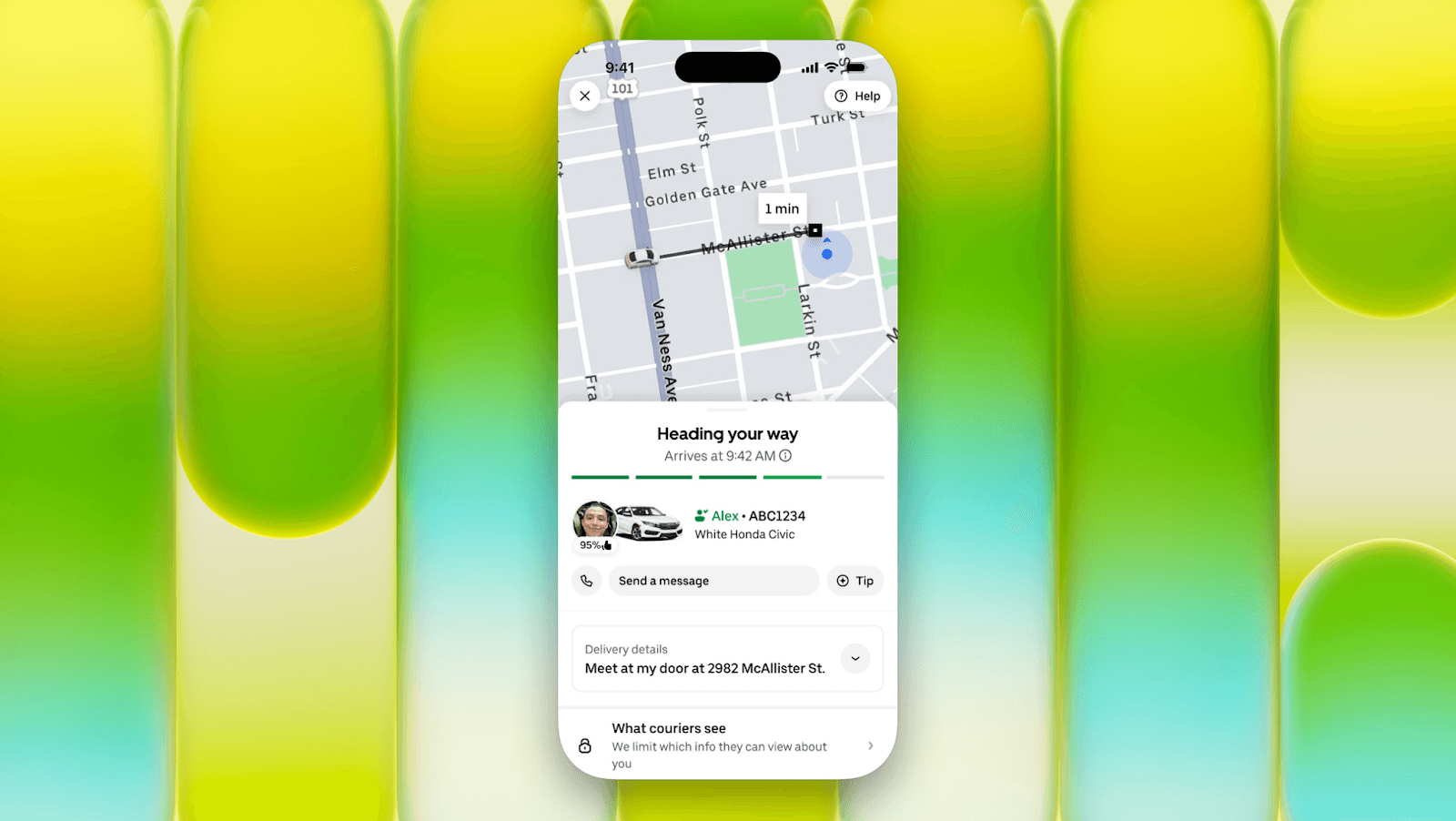
After writing about the positioning, I went by the Apple Store on the second day of the new wave of devices (including MacBook Neo) becoming available to check them out. Here are some of my observations on the MacBook Neo from my quick trip:
Design
A ground-up design made for education and repairability
The MacBook Neo overall inherited the design from the existing MacBook Air/Pro lineup; however, most people are deceived by the look and are judging from a surface level. The latest teardown of the MacBook Neo published by TECH RE-NU explains that the new MacBook Neo is actually designed from the ground up, instead of being cost-downed from current products. By comparing it to the iFixit teardown of an M2 MacBook Air, even without any mechanical engineering background, you should be able to easily tell it’s a fresh design instead of a stripped-down version.
As the video pointed out, it takes less than 10 minutes to disassemble the MacBook Neo into individual parts with no glue or tape. This level of repairability is clearly designed with younger users in mind, where devices might be used in a more brutal environment than an office. I also wonder if it has better water ingress protection compared to other MacBooks. Or better drop protection with the empty space around the speakers filled with plastic fillers.
When Apple has tried everything it can to fit everything into the iPhone Air, yet compromised one speaker due to space constraints (or to have the thinnest body possible), the contrast of seeing empty space where it's not needed is very interesting to me. It's also a masterclass on how product design is led by product philosophy at Apple.
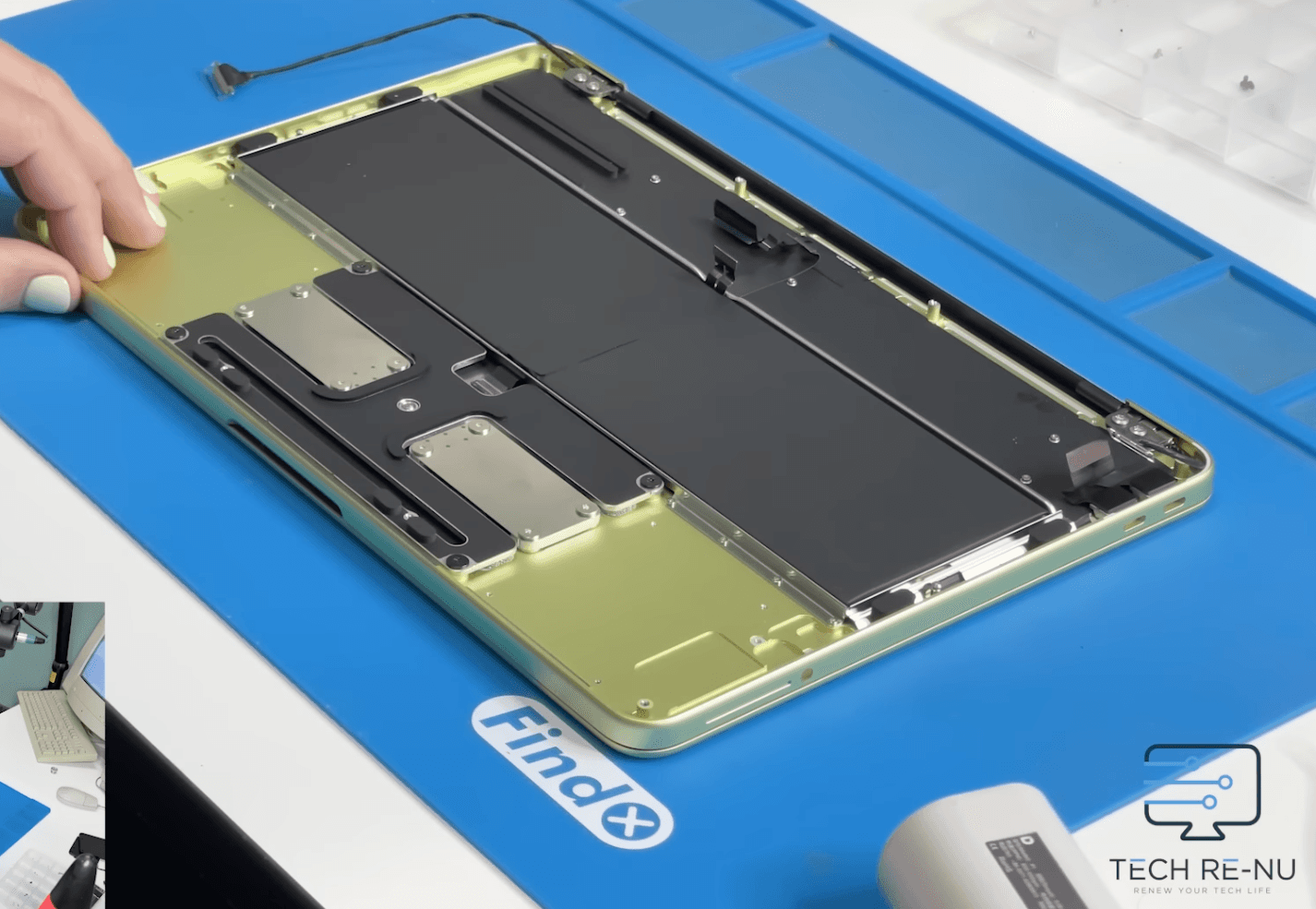
Under leveraged space next to touchpad. Source: TECH RE-NU
Why did Apple move the 3.5mm headphone jack?
When the product was first announced, the position of the 3.5mm headphone jack being moved to the left side, middle of the frame (instead of top right corner like on the MacBook Air and MacBook Pro) seemed weird to a lot of journalists. I think it's due to space restraint.
The MacBook Neo is narrower at 29.75cm while the MacBook Air is a bit wider at 30.41cm. From iFixit’s X-ray image, you can tell the Touch ID is already touching the edge of the 3.5mm headphone jack module. So shrinking down the width might jeopardized the 3.5mm port placement.
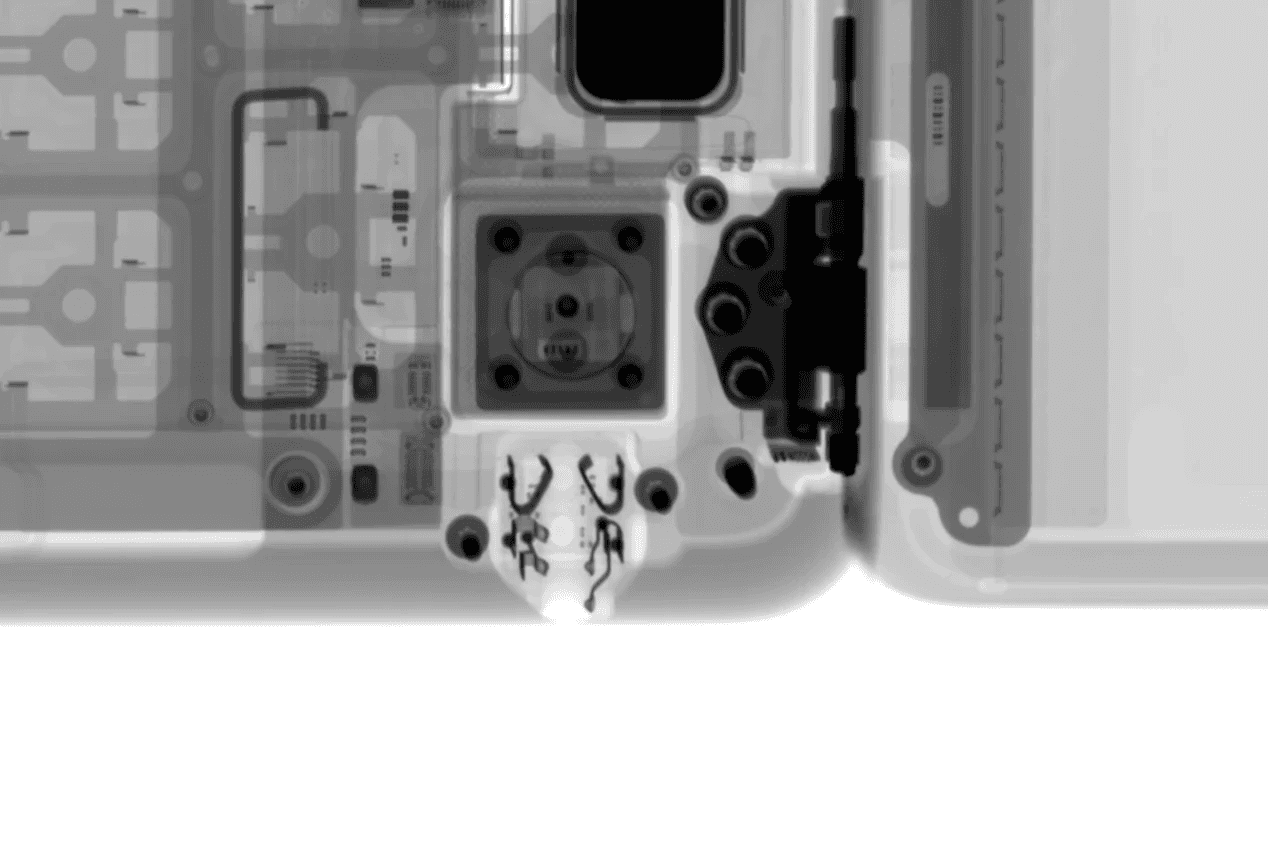
MacBook Air M2 tear down. Source: Ifixit
Although from the teardown video, there seems to be enough space in the top right corner, this teardown model doesn’t include Touch ID button (the 256GB version). My personal visit to the store also found that the Touch ID button on the MacBook Neo feels more clicky than the MacBook Air, and the Touch ID itself has a higher depth from the button surface than the MacBook Air’s Touch ID. The Touch ID button can also be a lower-cost version tat takes more space.
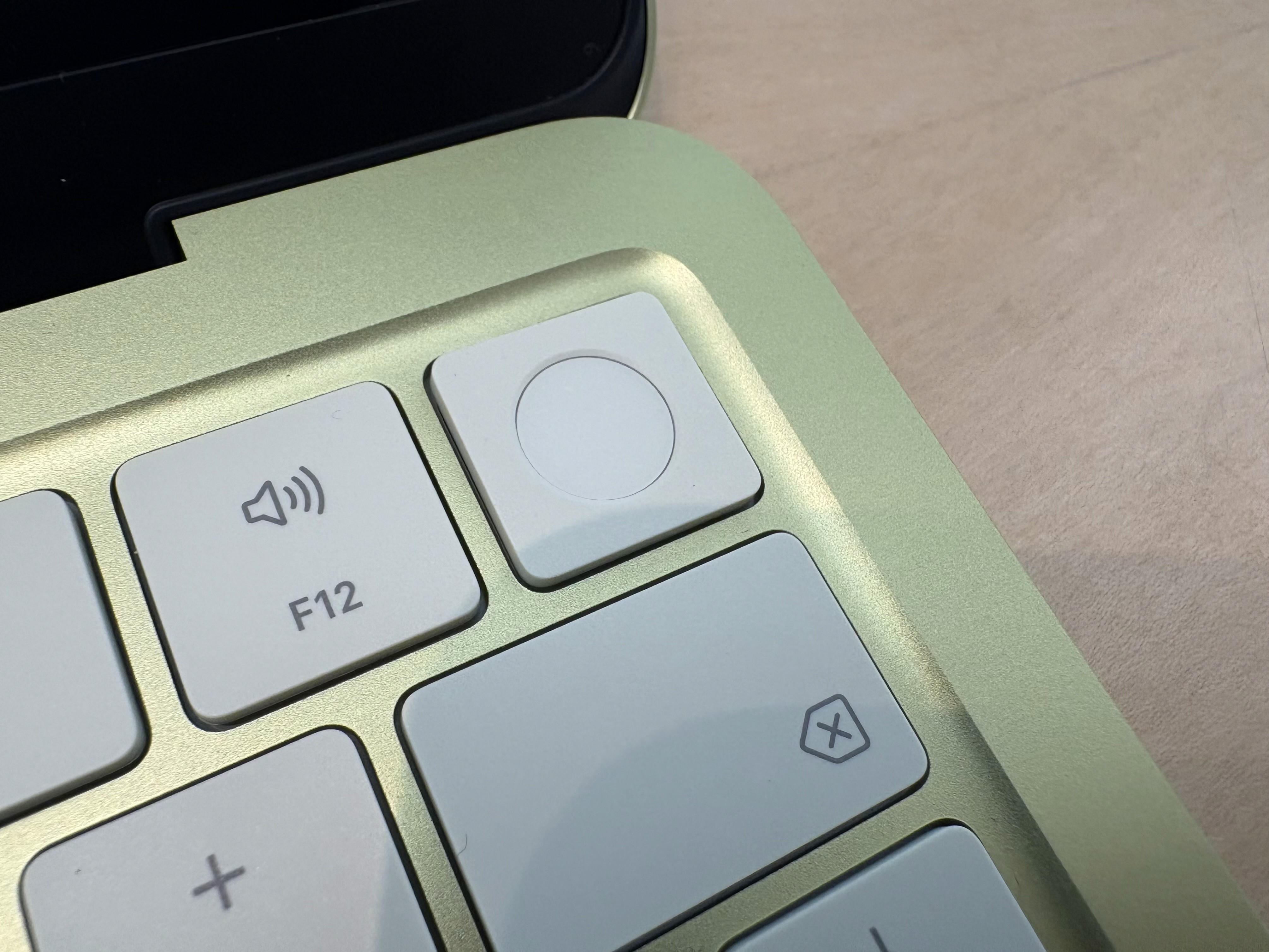
The Touch ID button is more deeper on MacBook Neo than MacBook Air
All that is to say, my first theory is that physical limitations caused the change: either the narrower body already made it impossible to fit the 3.5mm port regardless, or a cheaper Touch ID model is taking up more space. The next available space would be below the battery, and of course, the right side will annoy the majority right-handed users with a mouse, and that’s why it landed at its current location.
However, since I’m guessing a lot already, if I have to be bolder, let's reverse engineer from Apple’s product philosophy, that this is a MacBook designed for Education market. What if, at one of the product meetings, someone raised a voice, saying, “Hey, my kid uses wired headphones all the time, and I don’t want them staying too close to the screen, but the headphone wire is always too short for that purpose.” Voila, Apple engineers just moved your kids’ head/eyes 15cm away from the laptop screen.
It’s a very funny exercise, and I hope some Apple engineer who worked on the project can read it and reach out to me to let me know if I’m correct.
Fresh and attractive colorways
MacBook Neo offers 4 colorways, with two more traditional silver/indigo, one iPhone-like pink (Apple calls it blush), and one brand new neon yellow (Apple calls it citrus).
Is citrus close? Not at all after seeing the real device. Personally, I think it’s close to the Cyberpunk 2077 brand colors when presented in the Apple Store lighting. It’s very striking and attractive. It will be my go-to color if I’m getting this device.
What I don’t like are the keyboard colors. The CMF design matched them to the body color but in a washed-out fashion. I don’t like washed-out jeans, nor do I like those keyboard colors.
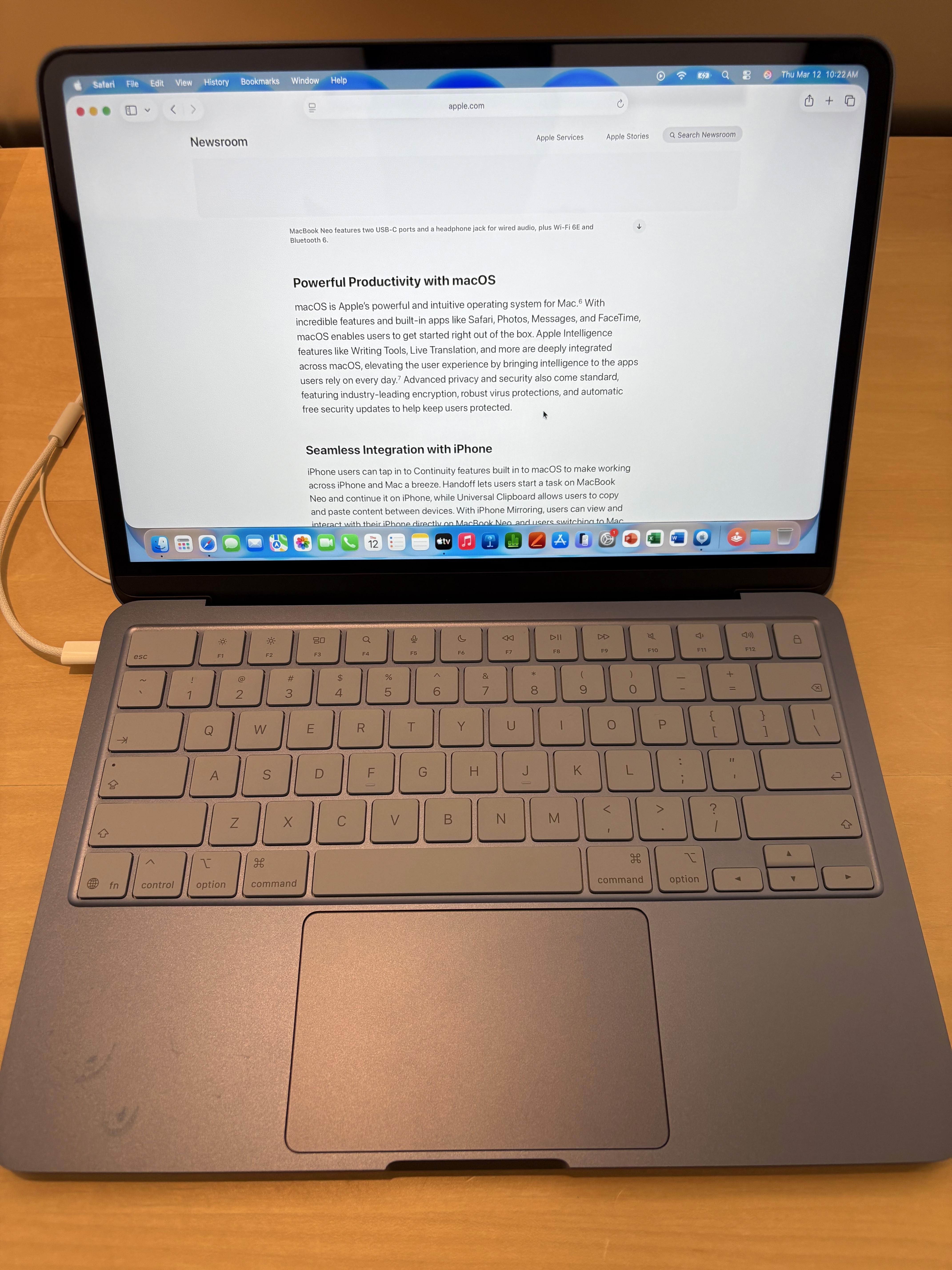
Keyboard keys color looks washed off
Same keyboard as $3000 MacBook Pros
Another thing to point out about the keyboard is the lack of a backlight; most people already saw it as a cost-cutting compromise. To raise a different opinion again, and not in defense of Apple’s product team as their PR team: what if at another product meeting, someone said, “Hey, I also don’t want my kids to use their laptop in the dark, that’s also bad for their eyes.” Voila, let’s take out the backlight keys, so they have to use it with some sort of environmental lighting. See? Apple is trying really hard to keep your 20/20 vision.
Also, I mentioned above that the Touch ID button is a bit more clicky on the MacBook Neo than the MacBook Air, but if you are getting the basic version, it won’t affect you. Or if you opt for the 512GB version with Touch ID, it’s also not a very frequent feature that I think would bother a lot of people.
Look and Sound
Audio is the only thing I definitely don’t like about the MacBook Neo
Two reasons: first, they are crappy. When I played some content at max volume, they sounded like I’m playing from an old-school handheld radio with zero fidelity. Probably not the best device to consume a lot of content. Second, they vibrate. By science, speakers have to vibrate to literally make sound, but Apple has positioned each of them under the palm rests. Again, when I was playing some music at max volume, the whole unibody vibrates, or even shakes if I’m exaggerating. I feel like if I’m typing (or playing games) while playing music at louder volumes, my hands will probably feel numb after a while.
But, think of the great Apple product philosophy: maybe you shouldn’t use your laptop for so long if you are still in K-12. Go out, enjoy nature, don’t dwell on your laptop for that long. I’m being a bit sarcastic here, but I generally agree you shouldn’t use your laptop for too long, either because your hands feel numb due to speaker vibration or any other reason.
Duller screen compared to Mac, crispier compared to other education market laptops
Overall the screen looks good with a traditional 13-inch Apple quality display. Most reviewers have pointed out the color range (sRGB) is a bit limited compared to other MacBooks (P3); the actual screen does look a bit dull if you are used to the more expensive MacBooks. However, the Retina-level resolution along with the sRGB color range is still better than most Chromebooks and some similarly priced PCs, which would actually be a competitive advantage.
One more observation from me is that the screen opening angle is actually limited by a few degrees compared to the MacBook Air. I guess this resulted from cost-cutting on the hinge. Which, if I’m being sarcastic again, would actually fix your kids' sitting posture since they need to keep the laptop more at eye level in order to look at it comfortably.
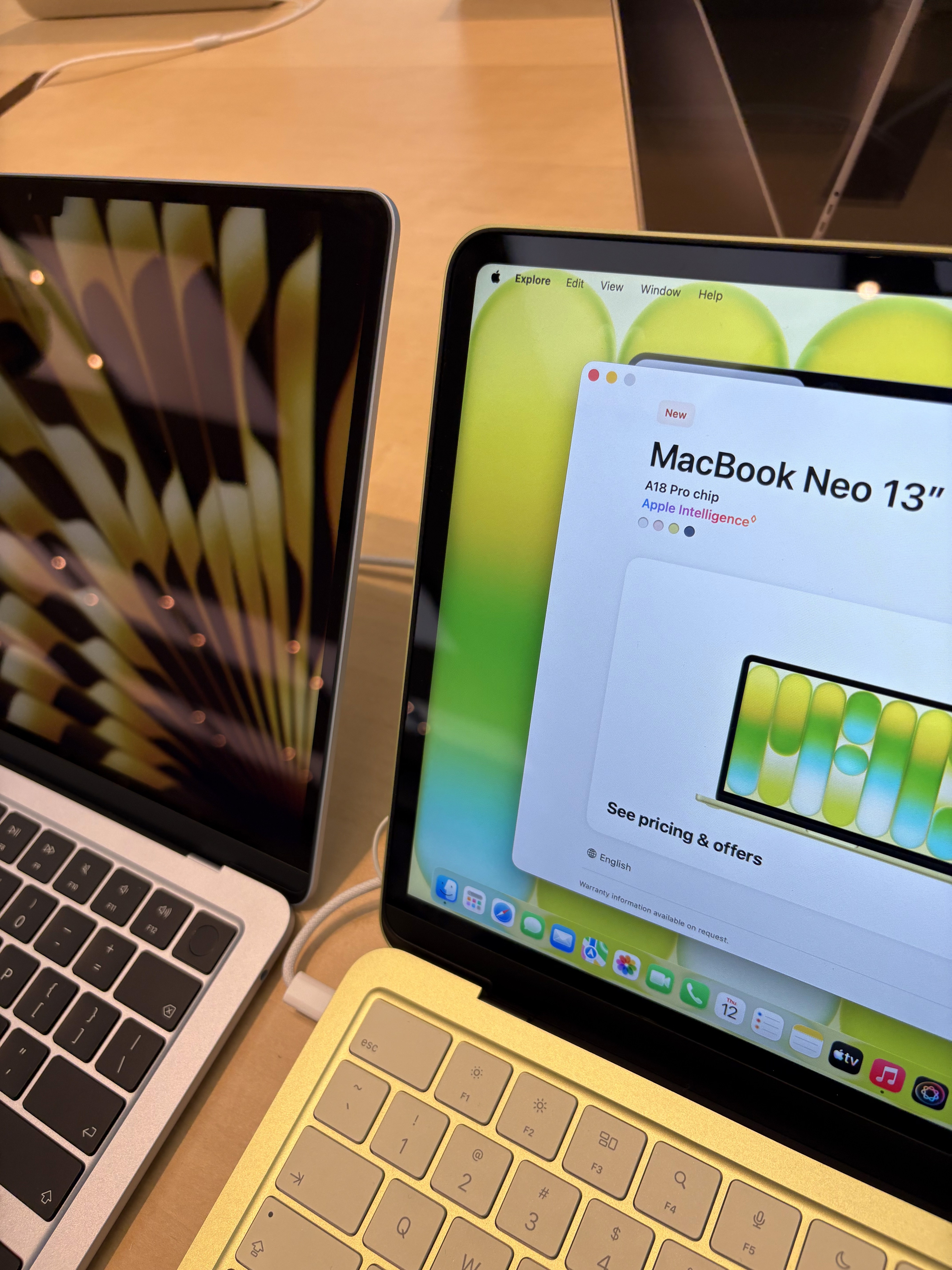
MacBook Air can open up a few more degrees than MacBook Neo
Performance
Putting a laptop chip in a phone was a nightmare (check out Intel chip phones), but is putting a phone chip in a laptop a better idea? Apple thinks it’s a genius idea, and I agree so.
Although there might be other limitations due to the chipset baseline design, such as putting USB 2 + USB 3 ports instead of using two USB 3 ports, the absolute performance doesn’t lag that much. A lot of tests have shown that the A18 Pro is actually as good as the M1 chip launched a few years back.
I opened the Microsoft Office suite (PowerPoint + Excel + Word) along with the Apple Docs suite (Keynote + Pages + Numbers), and a simple demo doc within each app, along with Safari running, and the MacBook Neo handled it well. As much as education needs go, I don’t think asking anything more than that is very logical.
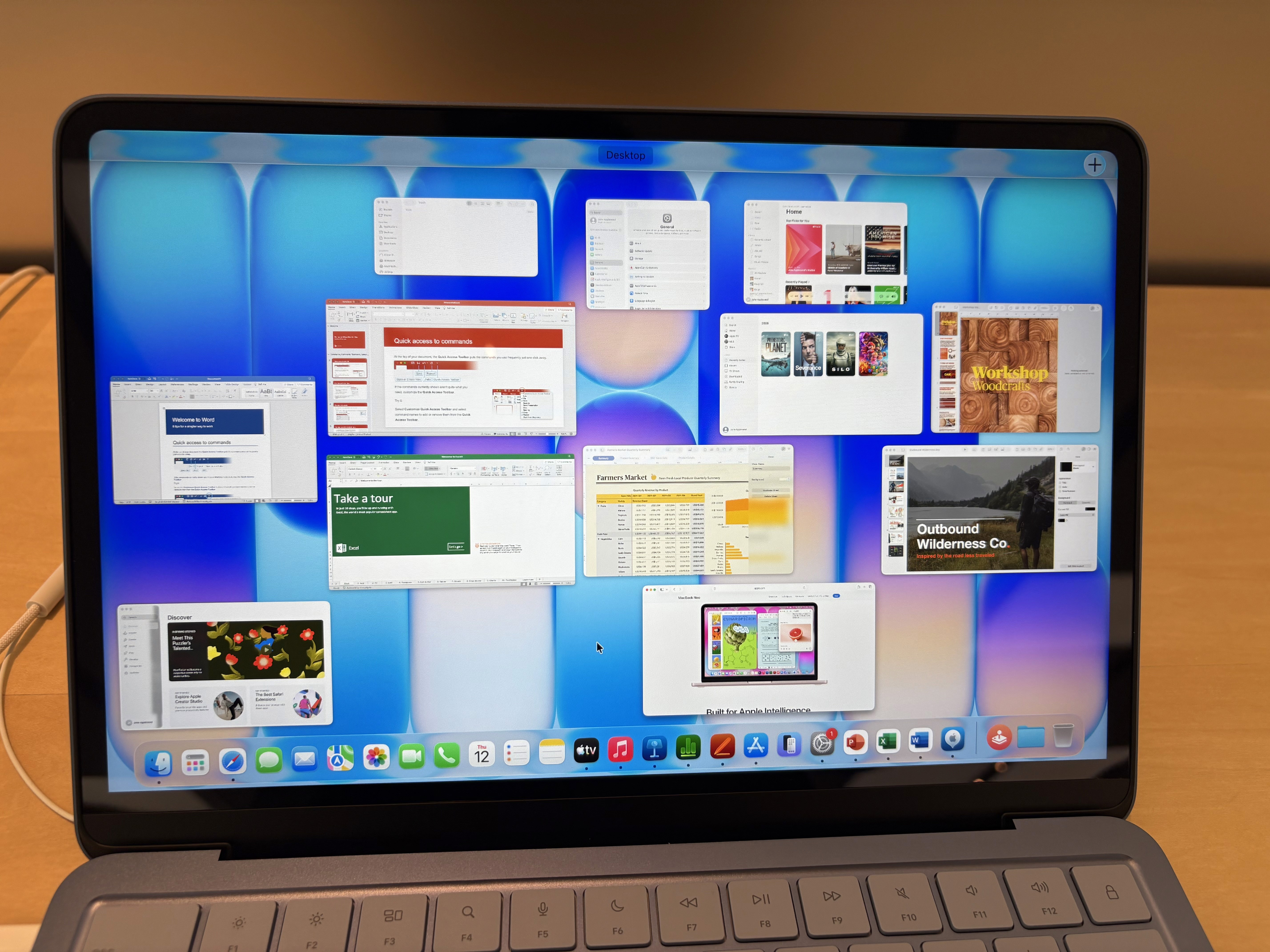
Smooth operation with education related apps
With years of effort transitioning from the x86 architecture to the ARM-based M-series chipset, I also don’t foresee any compatibility issues running any apps on the MacBook Neo, not to mention it can also natively support iPhone and iPad apps.
Naming
In 2015, Apple launched the 12-inch MacBook with no designation in the name. The exact word used in Apple Newsroom PR release is "reinvent". There are only a few times Apple has used such heavy word when launching their new products. iPhone, HomePod, AirPods, Apple Card and Apple Vision Pro are a few products deserved such description in Apple's marketing copy system.
Having such a high hope for the 12-inch MacBook, the flop in user sentiment following the launch must be a huge disaster inside Apple. And no-designation could lead to association that this device is "THE" MacBook which could damage the reputation across product line for ordinary consumers who don't care about tech history.
In recent years, Apple has steered away from the approach. A no-designation product is generally the cheap, entry-level product in a product line, e.g. iPhone, AirPods, iPad. However MacBook Neo didn't go with this logic, albeit being the entry-level MacBook in the line up.
This contradiction could mean two things, first, Apple really want people to forget about the 12-inch MacBook to avoid any association with it, second, Apple is treating it as a brand new product line (like iPhone Air), which is the education market mentioned above.
But, as much as the consistency Apple cares most about than any other companies in the world, unlike MacBook Air/Pro or iPad Air/Pro which have "Air/Pro" in its default wallpaper, the default wallpaper of MacBook Neo says "Mac", not "Neo". Huh. This smells like a really last minute decision where the placeholder wallpaper was used as final. Either the marketing debates lasted really long time, or Apple is running out of time before making a decision.
Anyway, I hope Apple's marketing team can see this article and let me know if there are any stories behind the naming logic. Neo itself is adequate for this device in my opinion.
In the end
The new MacBook Neo is such a clearly positioned product with near-perfect execution on balancing specs and design. Instead of thinking of it as a stripped-down version of $3000 MacBooks, you should absolutely treat it as the first computer anyone should own, or simply replace any premium Chromebooks or entry-level Windows laptops in your home, school, or office.
It gets me excited to see such a product launched in the market, and I really hope the market will validate it by sheer sales numbers. My next question is: when should you choose an iPad and when should you choose a MacBook Neo? Stay tuned for next blog.